Rival Robotics Kickoff Robot
A simple soccer robot for the Rival Robotics competition kickoff game, designed using a layout sketch workflow to derive geometry with VEX electronics.
Project Overview
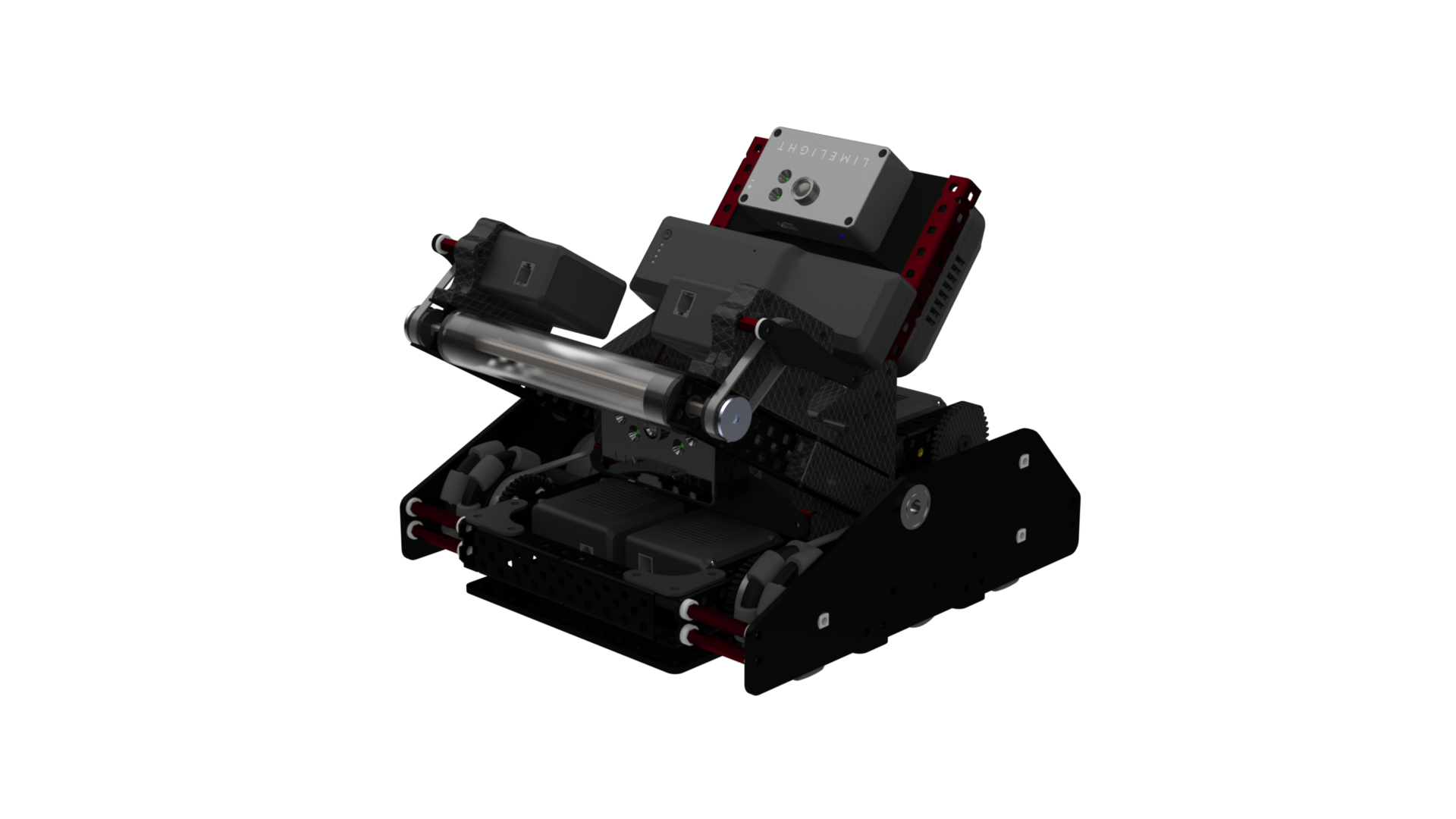
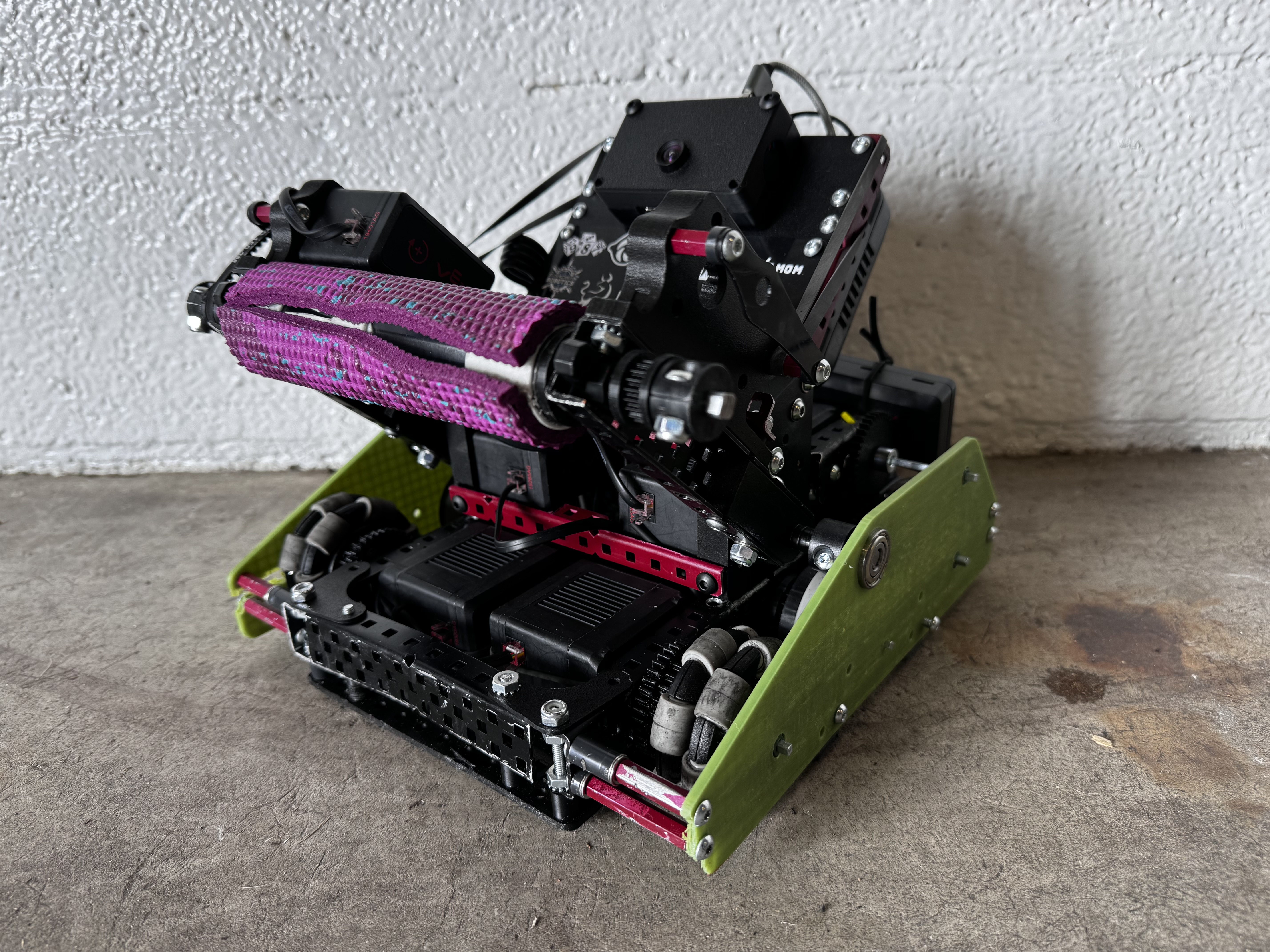
A competition robot built for the Rival Robotics Kickoff game—a simple soccer-style competition. Rival is a new robotics competition with almost no hardware limits, making it ideal for rapid prototyping and creative designs. We competed at the second Rival event at OC Maker Faire.
Role: Designer
Competition: Rival Robotics Kickoff
Tools: SolidWorks, VEX Electronics
Design Philosophy
The robot was designed with simplicity as the primary goal. Using VEX Brain electronics kept the control system straightforward, allowing us to focus on mechanical design and competition strategy rather than complex electronics integration.
Layout Sketch Workflow
The entire robot geometry was derived from a single layout sketch. This approach lets you work out mechanism kinematics, packaging, and key dimensions before committing to detailed part design.
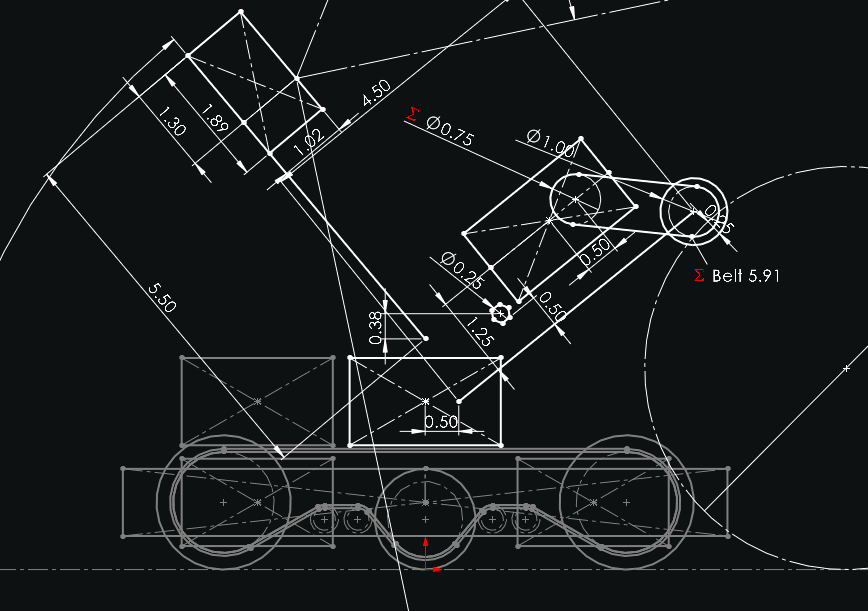
Key dimensions from the layout:
- Wheelbase: Omni wheel drivetrain with 4 wheels & 2 traction wheels
- Kicker Roller: Belt-driven mechanism (5.91" belt path)
- Kicker Arm: Direct driven pivot on 4.5" arm
The sketch captures:
- Wheel positions and ground clearance
- Kicker arm range of motion
- Center of gravity considerations
- Ball interaction geometry for the soccer game
Key Mechanisms
Drivetrain
- 4-wheel omni drive for maneuverability in the soccer game
- 2 traction wheels to resist pushing and rotate around the center
- Compact frame for agility
Kicker
- Designed to strike the ball with consistent force
- Geometry derived directly from layout sketch
Electronics
- VEX Brain for simplicity and reliability
- Minimal wiring complexity
- Quick iteration during competition
Competition
| Event | Result |
|---|---|
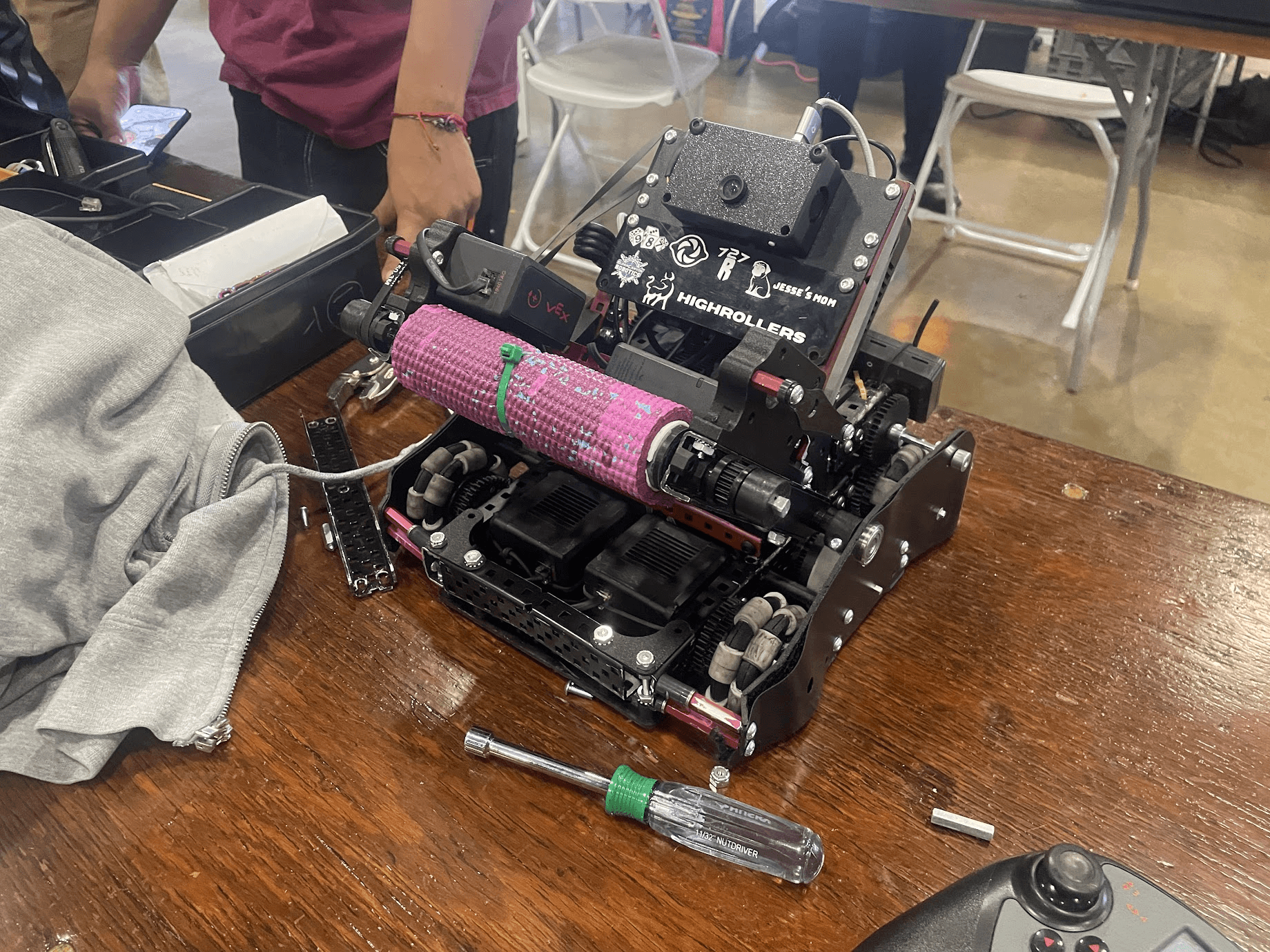
| OC Maker Faire | Competed (2nd Rival Event) |
Challenges
Manufacturing Crunch
The side plates were designed to be machined from aluminum, but we ran out of time and resources before the competition. As a last-minute solution, we 3D printed them in glass-filled nylon right before the event.
Power Mismatch
Running a low-power brushed VEX system, we were significantly outmatched by competitors running 18-24V brushless drivetrains. The power difference became painfully clear during pushing matches.
Structural Failure
After a few matches of hard impacts, the 3D printed side plates began to fail. The glass-filled nylon delaminated under repeated stress, and cracks propagated through the load-bearing areas.
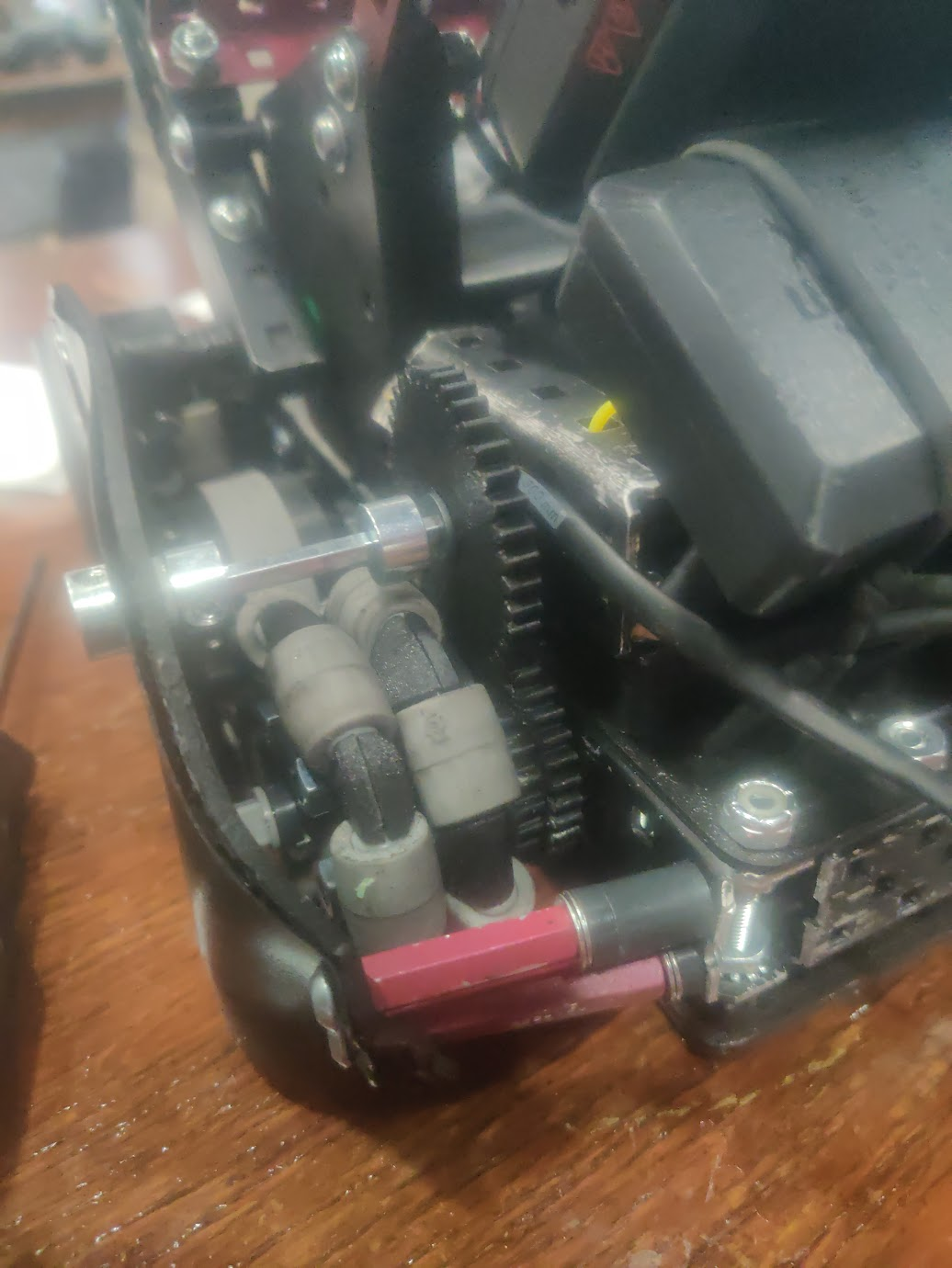
Lessons from failure:
- Glass-filled nylon is strong but brittle under impact—not ideal for a combat-adjacent application
- Last-minute material substitutions carry significant risk
- Match your power system to the competition meta
What I Learned
- Layout sketches accelerate design: Defining geometry in a single sketch before modeling parts prevents rework
- Simplicity wins: VEX electronics and a straightforward mechanism let us focus on driving and strategy
- New competitions = experimentation: Rival's minimal hardware limits encourage creative solutions
Tech Stack
| Area | Tools |
|---|---|
| CAD | SolidWorks |
| Electronics | VEX Brain |
| Design Method | Layout Sketch → Derived Geometry |